Equine Assisted Therapy Australia

10th anniversary
Conference 2026

10 Years of Teaching, Practice & Community

Equine Assisted Therapy Australia’s 10th Anniversary Conference

Information Pack

Date: September 21 – 23, 2026
Venue: Selah Valley Estate, Tweed Valley, Northern NSW

We welcome delegates to arrive from 1.00pm on Monday, September 21, when registration will open. The official conference opening will begin at 2.00pm.

Welcome

Thank you for being a part of Equine Assisted Therapy Australia’s 10th Anniversary Conference.

Held at the beautiful Selah Valley Estate in Northern NSW’s Tweed Valley, this conference has been intentionally designed to go beyond your traditional professional development event.

Our hope is to create a space that encourages experiential learning, reflection and connection within a restorative natural environment that embraces the conference theme ‘Community’.

This information pack contains important information to help you prepare for the conference, including venue details, presentation information, travel logistics and key dates.

The conference is open to everyone, from students and those curious about the field of equine-assisted mental health, to experienced practitioners and professionals.

We look forward to welcoming you.

About The Conference

Equine Assisted Therapy Australia’s 10th Anniversary conference will bring together professionals from diverse mental health, educational and equine backgrounds as we celebrate and reflect on 10 years of leadership in equine-assisted mental health training.

Our conference is an ACA-approved OPD event where eligible attendees can earn 12 OPD points – more than half a registered counsellor’s yearly requirement.

We will explore topics related to attunement and relational awareness in horse–human interactions, trauma-informed frameworks to support safety, practical skills for working with diverse communities and explore established therapeutic frameworks and how they can be integrated with equine-assisted therapy.

Through presentations, experiential workshops and collaborative discussions, the conference aims to foster meaningful learning that attendees can apply to their own practice.

The conference has been limited to 100 attendees, to allow participants the opportunity to engage in meaningful connections and immersive learning experiences.

The conference will be held at Selah Valley Estate, a luxury events venue nestled on a 430-acre working farm, quietly situated in the Tweed Valley, in Northern NSW (not far from the QLD/NSW border).

Formal conference proceedings will be held in ‘The Pavillion’ the main corporate facility onsite. A registration table will be set up outside The Pavillion to help you navigate the area and also provide you with your conference materials.

The venue was chosen due to its tranquil setting with surrounding bush and creeks that provide a retreat-style feel. It allows plenty of options for immersive learning and out-of-conference hour activities.

It also allows us to have horses onsite, which will be important for our equine-assisted therapy demonstrations and workshops.

There is a range of accommodation onsite, including modern cabins, lodges and glamping or camping with access to onsite kitchen and bathroom facilities.

Our vision is to bring guests together for this two-and-a-half-day event and we encourage attendees and presenters to stay onsite for not only convenience, but also to foster a sense of community.

If you would like to stay onsite at our conference venue, please contact Selah Valley Estate directly at: accounts@selahvalleyestate.au as they have blocked out our conference dates on their website to hold accommodation for our guests.

Presenters are responsible for arranging their own travel and accommodation requirements unless otherwise agreed with the organising team.

If you would like to look at alternative accommodation, there are options in the nearby villages/towns of:

Tyalgum: Located just a 10-minute drive away, this charming village offers options like the historic Tyalgum Hotel.

Chillingham: About 15 minutes away, known for its quaint village feel and close proximity to the estate.

Murwillumbah: A 20-minute drive away, this is the largest nearby town, offering a wider variety of motels and boutique stays.

Uki: Located about 25 minutes south of the estate, offering several bed and breakfasts and cottage stays.

Selah Valley Estate is located at 110 Youngs Road, Limpinwood NSW 2484.

It is remotely located in the Tweed Valley, Northern NSW, but six fuel stations and four supermarkets, are all within 20–25 minutes of the estate.

Travelling by car:

If you are traveling by car, you will be driving into the Tweed Valley along sometimes long and winding roads.

The property sits at the end of a shared dirt road (approximately 1km) but is clearly signposted so you can’t miss it. There is plenty of onsite parking.
Please drive slowly and carefully to keep noise and dust to a minimum.

Note: Access roads may become impassable during excessive rainfall or flooding. Never attempt to cross flooded roads. Check local conditions before travelling during wet weather.

Mobile reception may be limited in some areas of the estate.

Travelling by plane:

If you are travelling by plane, the closest airport is Gold Coast/Coolangatta Airport, which is approximately 45 minutes to the venue. You will need to pre-book a shuttle or uber that can take you from the airport to the venue when you land. If you need any help with this, please contact info@eata.net.au and we will help to ensure this is a seamless travel process for you.

Equine Welfare & Safety

Equine Welfare & Safety

Equine Assisted Therapy Australia places a strong importance on ethical, safe and respectful interactions with horses.

Presenters incorporating horses into sessions are asked to prioritise horse welfare at all times and ensure participant safety. We will have about six horses onsite.

If you require horses as part of your presentation, please let us know.

Conference Information

Key Dates:

Conference Dates:
Monday, September 21 – Wednesday, September 23, 2026

Presenter Confirmation:
May 31, 2026

Conference Timetable Release:
June 1, 2026
Download the Conference Timetable here

Conference Days:

The conference will officially start at 2pm on Monday, September 21, 2026.

It is a two-and-a-half-day event that will finish on Wednesday, September 23 at 4pm.

Conference times:
Monday: 2pm – 8pm
Tuesday: 9am – 4pm
Wednesday: 9am – 4pm

Please note all times are AEST.

Key Contact - Conference Enquiries:

EATA Team – Sarah Waters
Email: info@eata.net.au
Phone: 0411 377 531

Venue Contact - Selah Valley Estate:

Code of Conduct

EATA is committed to maintaining a respectful, inclusive and safe conference environment for all attendees, presenters, volunteers and horses.

Code of Conduct

Final Note

Thank you again for contributing to Equine Assisted Therapy Australia’s 10th Anniversary Conference.

We are honoured to have your involvement in our professional community and look forward to welcoming you to Selah Valley Estate this September.

Join the community

To receive information about our upcoming retreats, groups and courses, please complete the below form.

Jane Faulkner

Bio:

Jane Faulkner is the Founder and Director of Equine Assisted Therapy Australia (EATA), a Registered Training Organisation, that has been delivering counselling and equine-assisted mental health training across Australia since 2016.

Jane holds a master’s degree in Gestalt Psychotherapy, and has spent more than two decades working in the mental health and wellbeing sector. Her work is grounded in relational, experiential and trauma-informed approaches, with a particular interest in the human-horse relationship and nervous system awareness.

Under Jane’s leadership, EATA has trained more than 300 equine-assisted mental health practitioners that now operate private practices across the country, especially in remote communities where access to traditional mental health services is low.

Equine Assisted Therapy Australia has continuously aimed to lift the professional standards and recognition of equine-assisted therapy throughout Australia.

Jane is committed to supporting both human and equine wellbeing through innovative, evidence-informed training and education.

Presentation:
A Felt Sense of Belonging: Working with the Body and Horses to Support Aliveness, Connection and Community.

Many people arrive in therapy feeling disconnected – from their bodies, emotions, relationships, communities and even from themselves. While they may understand their experiences cognitively, they often struggle to feel present, engaged and fully alive.

This presentation explores how working with the body and horses can support the development of greater nervous system capacity, embodied self-awareness, relational presence and a deeper sense of belonging. Through a trauma-informed and experiential lens, participants will examine how horses help people reconnect with themselves, access authentic experiences in the present moment, and develop the capacity to engage more fully with others and the world around them.

The presentation will explore belonging not as something we achieve externally, but as an embodied experience – a felt sense of being at home within ourselves.

Learning Outcomes:

Participants will:

Jenn Pagone - Keynote Speaker

Bio:

Jenn Pagone, LCPC, is a licensed psychotherapist, certified Trauma Recovery Coach, global trainer and the founder of Pagone Psychological Services, PLLC, and Whispering White Horse Stables – a premier therapeutic ranch in Marengo, Illinois. With nearly two decades of specialisation in complex relational trauma, medical and reproductive trauma, somatic disorders and eating disorders, Jenn has dedicated her career to bridging the worlds of advanced clinical psychology and Self-Led Horsemanship™.

As a trainer for the Internal Family Systems Institute and the Syzygy Institute, as well as an EMDRIA-approved Consultant, Jenn is the creator of Equid-Nexus®: An Equine-Engaged Parts Work Facilitation Model. This innovative framework integrates the profound internal healing of IFS with a focus on memory reconsolidation and the somatic resonance of the equine relationship, emphasising both human healing and equine agency.

Jenn’s extensive background in the equine-assisted field includes serving as a Natural Lifemanship Trainer (2020–2024), holding advanced dual certifications as both a mental health and equine professional and previously maintaining an Eagala certification. A former adjunct professor of clinical psychology and a seasoned international conference presenter, Jenn regularly hosts professional workshops for the Equid-Nexus Model and Self-Led Horsemanship™ Clinics worldwide.

Presentation:
The Connected Self: Alignment, Integrity, and the “Why” Behind the Work

In celebration of Equine Assisted Therapy Australia’s landmark 10th anniversary, this keynote address invites participants into an embodied, self-reflective journey toward their connected self. Embodied inspiration cannot be pulled in from the outside; it must be uncovered from within. This keynote explores how our deepest personal pain informs our professional passion, and how we can put that passion to good use to support healing for our clients, our horses and ourselves.

Drawing from her profound personal journey to heal from a childhood of complex relational trauma and grief, and believing “the personal is the professional”, Jenn Pagone explores the ultimate antidote to trauma: Self-Connection through earned secure attachment with another. Through the relationship with her horse, Casper, she experienced reliable attunement, rupture with repair, and experienced the felt sense of somatic mismatches from her internal protector’s feared forecasts from the past. This was more than emotional healing; it was concurrently updating the mind, body, and soul, leveraging a biological neural update to achieve deep memory reconsolidation in real time.
This session includes a collective, live experiential meditation to support practitioners in dropping into their own self-energy, connect with their hard-working internal protectors, and listen to the quiet whispers of their tender, exiled parts ‘please don’t forget me’.

Learning how to have a daily internal connection practice supports our personal and professional growth and increases our ethical integrity. The ultimate intention is to develop into Self-Led Facilitators and by returning to our original ‘why’ we ignite an internal spark of passion that transforms our pain and can guide our field into the next decade of service through self-connection and intersubjective attunement to horses and humans. It starts with each of us – one part at a time.

Learning Outcomes:

Rupert Isaacson

Bio:

Rupert is a lifelong horseman and journalist, best known for his best-selling book and award-winning documentary, The Horse Boy.

The Horse Boy documents Rupert and his family’s extraordinary adventure across Mongolia, which was inspired by his son Rowan.

When Rowan was three years old, he was diagnosed as autistic non-verbal.

Rupert and his wife explored a wide range of therapies, but found little that truly supported him.

Everything changed when Rupert noticed how profoundly Rowan responded when he was with horses and how he began to communicate.

The idea to travel to Mongolia, the ‘horse capital of the world’ was born.

During the family’s adventures across the Mongolian steppes, Rupert explored ancient shamanic healing practises, and how they could help Rowan.

He also remined keenly interested in how these ancient healing practices, intersected with the role of horses, which are central to the country’s daily life, spirituality and cultural identity.

Following the family’s life-changing adventure, Rupert had a renewed interest in the therapeutic potential of horses, especially for neurodivergent children.

He set about developing an equine-assisted therapy model known as the Horse Boy Method under the mentorship of neuroscientists from the US and Europe.

Horse Boy Method is the only equine intervention, specifically designed for the nervous system and the brain.

It uses rhythmic horse riding and the outdoors to help calm the nervous system and improve regulation, communication and learning.

The rhythmic rocking motion experienced by individuals riding a horse helps to engage the parasympathetic nervous system – the body’s natural ‘rest and digest’ response, while also encouraging the release of oxytocin, a hormone associated with bonding, trust and connection.

At the same time, it can help reduce activation of the sympathetic nervous system and lower levels of cortisol, the hormone associated with stress and ‘fight or flight’ responses.

This calmer, more regulated state can support the brain’s executive function, which plays an important role in communication, attention and learning.

Horse riding and other forms of exercise is also linked to the release of Brain-Derived Neurotrophic Factor (BDNF), a protein that supports neuroplasticity, learning and cognitive development.

The Horse Boy Method is now used in about 30 countries and provides an effective program for cognitive and behavioural development.

Rupert also created the Movement Method, an extension of The Horse Boy Method, which focuses heavily on brain-building through controlled movement and play, but without the use of horses.

Therapists and parents can use swings, trampolines and everyday household furniture to trigger the same balance and sensory vestibular responses that riding a horse provides.

Leif Hallberg

Bio:

Leif Hallberg is an internationally recognised author, educator and experiential psychotherapist.

Leif’s 25+ years of clinical practice working at the intersection of physical and mental health as a sought-after complex case mental health diagnostician has given her a nuanced understanding of the complicated network of systems impacted by lifestyle, stress, attachment, and trauma.

Weaving together her extensive training and experience in depth and humanistic psychology, rites of passage, expressive arts, somatic or embodied awareness, mindfulness, systems and attachment theory, and holistic health and wellness, Leif gracefully combines centuries old practices with cutting-edge science, crafting a super-charged approach that is effective, powerful, and truly life-changing.

She has explored the myriad of health benefits that can be gained from engaging in respectful, relational and mindful interactions between horses, humans and the natural world.

Her books, including Walking the Way of the Horse: Exploring the Power of the Horse-Human Relationship, are used by universities around the world as teaching texts.

Leif is known for bringing together research, ethics, horse welfare and clinical practice, which has helped professionals to understand the complexity and power of the horse-human relationship.

This is a rare opportunity for Australian practitioners, students and horse professionals to learn from one of the most influential voices in the international equine-assisted therapy community.

Ilka Parent

Bio:

Ilka Parent is a clinical psychotherapist, educator, author and internationally recognised leader in Equine Assisted Psychotherapy (EAP).

She is the founder of Minds-n-Motion, an organisation through which she provides training and certification in Psychodynamic Equine Assisted Trauma Therapy (pEATT).

Psychodynamic Equine Assisted Trauma Therapy (pEATT) is an integrative treatment approach rooted in the guideline-compliant psychodynamic/depth psychological approach while adhering to recognized (DeGPT) trauma therapy guidelines.

Throughout her career, Ilka has dedicated herself to supporting individuals affected by severe and complex trauma.

Her clinical work, research and advocacy have played a significant role in promoting the integration of Equine Assisted Psychotherapy into mental health treatment settings across Germany and the United States.

Ilka is particularly recognised for her work in advancing Equine Assisted Psychotherapy as a treatment modality for military personnel and veterans experiencing combat stress reactions and trauma-related challenges.

From 2011 to 2016, Ilka served as Germany’s Network Coordinator for the Equine Assisted Growth and Learning Association (EAGALA), helping to expand awareness and adoption of equine-assisted psychotherapy practices throughout the country.

She also advocates for horse welfare and seeing horses as equal team members in the therapeutic process.

Camilla Mowbray

Bio:

Camilla is a qualified psychotherapist and equine assisted mental health practitioner.

Over the past decade she has built her private practice, C Horses, to become a leading provider of equine-assisted mental health services for people of all ages.

Camilla has extensive experience working with children, young people, and adults from diverse backgrounds. Her focus is on helping people rebuild their resilience and enjoyment of life following adversity and trauma.

She specialises in mindfulness-based trauma therapy utilising EMDR and EFT, with a neuro-affirming and somatic approach that involves her horses. As an equestrian coach, Camilla is passionate about teaching and researching sound practices in horse-human interactions, both on the ground and under saddle, and investigating how inter-species social engagement can be supported by equitation science and neurobiology.

For the past five years Camilla has been the NSW trainer for Equine Assisted Therapy Australia. She is involved in EATA’s current research project as well as a pilot collaboration with Westmead Children’s Hospital’s Mind Body unit.

Presentation:
A Pathway to Somatic Riding

Historically, equine-assisted therapy has involved riding horses, and there continues to be an intersection between mounted and unmounted forms of therapies involving horses and people.

This presentation will investigate contemporary models of ridden work in the equine-assisted therapy space and will look at the appropriate use and evaluation of Somatic Riding and its integration into co-created treatment plans.

Learning Outcomes:

We’ll also discuss:

Dean Mighell

Bio:

Dean is a Registered Psychotherapist, Workcover Counsellor, Equine-Assisted Psychotherapy Practitioner (EAP) and founder of Path of the Horse.

Dean utilises a range of evidence-based therapeutic modalities, much of which are room-based. However, he likes to encourage working outdoors, in the presence of horses. Therefore, his clientele can also experience the calming effect of horses, and being in nature is part of the therapy process too.

Dean is a proud recipient of the prestigious National Australian Equine Therapist of the Year Award from Animal Therapies Australia.

Dean holds a Post Graduate Certification as a Psychotherapist (Gestalt) and has undergone extensive training in trauma, Indigenous men’s trauma practice (We-Ali), mindfulness, Neurodiversity ADHD and Autism (Kings College London), and related conditions. He is a proud member of PACFA (Psychotherapy and Counselling Federation of Australia) and the International Institute for Complementary Therapies (IICT).

As a highly relational, empathetic, and holistic therapist, Dean is deeply passionate about supporting individuals from all walks of life. His expertise lies in working extensively with individuals experiencing Post Traumatic Stress and Complex Post Traumatic Stress.

Dean’s dedication extends to his work with military and emergency service workers and their families impacted by Post Traumatic Stress Injury and related conditions. His contributions in this area are highly respected within the veteran community.

Mindfulness is a cornerstone of Dean’s therapeutic approach. He employs a holistic methodology to support his clients.

Dr Rebecca Bailey

Bio:

Dr Bailey is an internationally recognised clinical psychologist, author and founder of the Polyvagal Equine Institute.

For more than three decades, she has worked with individuals and families recovering from complex trauma.

Her work focuses on advancing Polyvagal principles of safety, connection and co-regulation through interactions between human and horse nervous systems.

She continues to be dedicated to the notion that authenticity, common sense and kindness are the most important elements of effective treatment.

As a lifelong equestrian and animal lover, Dr Bailey believes animals – particularly horses – have much to teach humans about curiosity and compassion.

She is the author of two books: Safe Kids: Smart Parents and Equine Connections: Polyvagal Principles as well as articles on Polyvagal principles in the courtroom and the application of equine interventions to a variety of populations.

Peta Lowe

Bio:

Peta Lowe is an accredited social worker, founder of Pegasus Connections and director of Hooves2Healing.

Peta holds a Bachelor of Social Work, a Master of Social Work (Couples and Family Therapy), and a Master’s Degree in Terrorism Studies (Postgraduate University Medal).

She has more than 20 years’ experience across mental health, trauma, justice, psychosocial rehabilitation and community-based practice in both Australian and international settings.

Her professional background includes work in child and adolescent mental health, youth justice, trauma recovery, rehabilitation and reintegration and countering violent extremism programs.

Internationally, she has worked with organisations including UN-affiliated initiatives across Iraq, Ukraine, Somaliland, Indonesia and Kenya.

She delivered training, program development and advisory work focused on trauma, rehabilitation, identity, reintegration and community safety in conflict-affected environments.

Alongside her professional experience, Peta brings lived experience of military and first responder family life.

This includes the realities of service-related transition, which has strongly informed her understanding of identity, belonging, operational culture and the challenges individuals and families can experience both during and after service.

This perspective has shaped her passion for creating relational, experiential and trauma-informed equine-assisted approaches that acknowledge the complexity of moral injury, collective identity and loss of community.

Pegasus Connections has a particular focus on veterans and first responders navigating transition out of service, moral injury, identity disruption, loss of belonging and the challenges associated with moving from highly collective operational environments back into civilian life.

Through this work Peta integrates trauma-informed, relational and experiential approaches with equine-assisted practice to support nervous system regulation, relational safety, communication, leadership, trust and reconnection.

In addition to her work with Pegasus Connections, Peta currently delivers equine-assisted therapy at Hunter Valley Children’s Therapies, working with young people experiencing neurodiversity and other developmental, emotional and psychosocial challenges.

She is also an approved Victims Services Counsellor, providing trauma-informed equine-assisted therapy to individuals impacted by violence, abuse and complex trauma.

Peta is passionate about bridging theory and practice and creating experiential, evidence-informed approaches that are adaptable to real-world settings.

Her presentation draws on both research and lived practitioner experience to explore how concepts such as collective identity, “me versus we” culture, transition, and moral injury can shape the design and facilitation of equine-assisted activities and therapeutic processes with veterans and first responders.

Presentation:
Finding the Herd Again: Equine-Assisted Practice, Transition and Identity with Veterans and First Responders

This workshop will explore the unique considerations, challenges and opportunities in working with veterans and first responders within equine-assisted practice.

The session will examine how service culture, collective identity, operational conditioning and moral injury can shape engagement, regulation, communication, trust and relational dynamics within therapeutic settings.

The presentation will explore the impact of ‘me versus we’ culture, loss of belonging following transition out of service and the ways military and first responder environments shape identity, emotional expression, hierarchy, safety and connection.

Participants will be encouraged to consider how these factors influence the design and facilitation of equine-assisted experiments, activities and relational processes.

Learning Outcomes:

Through practitioner reflections, case examples and workshop-based experiential activities, attendees will explore how horses can support attunement, nervous system regulation, relational awareness, boundary setting, leadership and rebuilding connection in ways that are experiential rather than purely verbal.

The session will also critically reflect on what has and has not worked in practice, ethical considerations when working with complex trauma populations, and the importance of adapting approaches to meet the needs of veteran and first responder communities.

Aligned with the conference theme of Community, this session highlights the role of connection, shared experience, identity and relational safety in supporting recovery, transition and reintegration.

Brooke Shakspere

Bio:

Brooke Shakspeare is a mental health social worker, senior psychotherapist and Director of Therapywell Allied Health and Wellbeing – a multidisciplinary allied health practice based in Brisbane, Queensland.

She holds a Master of Social Work and is an Accredited Mental Health Social Worker (AASW), with additional training as an EMDR Level 1 and 2 practitioner and RI EMDR Level1 and 2 therapist.

Brooke is also currently completing her application for accreditation with the EMDR Association of Australia (EMDRAA).

Brooke has been practising in equine-assisted therapy since 2016, following the completion of her equine facilitated wellness training with the Professional Association for Equine Facilitated Wellness (PAEFP) in Canada.

Horses, however, have been a central thread of her life from the beginning.

She has ridden her whole life, and her family has lived with horses across generations.

That deep, embodied relationship with horses forms the foundation of her clinical practice.

Brooke’s clinical work spans complex PTSD and developmental trauma across the lifespan, first responders and neurodivergent individuals.

She integrates equine-assisted therapy with trauma-informed, systemic, nature based and somatic frameworks, including EMDR and Resource Therapy, to provide intensive, relational and embodied therapeutic experiences.

Presentation:
The Parts That Come Together: A Framework for Holding Complex Trauma - Through an Equine-Assisted Lens.

Complex trauma presentations place extraordinary demands on the clinician, not just technically, but somatically, relationally and systemically.

What does it actually take to hold this work well? What sustains the clinician so they can sustain the client?

This presentation introduces an original clinical framework – The Parts That Come Together.

Developed to articulate the inter-dependent domains that a clinician must hold, embody and be held within when working with complex trauma.

The three domains are:

The framework is then explored through the lens of equine-assisted therapy – examining what horses uniquely offer each domain, and what we also need to integrate into the framework when including horses in our work as trauma clinicians.

Horses are relationally embodied beings that offer biofeedback in real time.

They make the invisible visible. They provide co-regulation, somatic attunement, and opportunities for relational exploration and connection in ways no other therapeutic modality can replicate.

The presentation also introduces antifragility as a conceptual frame – moving beyond resilience to explore how, when integrated and moved with complex trauma work, does not merely deplete the clinician but can deepen them.

This requires the three domains to be genuinely present and organisationally supported.

Delegates will leave with a clear, evidence-informed framework they can apply to their own practice and supervision, and a deepened understanding of why equine-assisted therapy is a modality that can present unique opportunities in complex trauma work for both clinicians and clients.

Learning Outcomes:

Sarah Camille

Bio:

Sarah is a trauma-focused Counsellor and Equine Assisted Mental Health Therapist, and founder of Solace and Sanctuary, a nature-based counselling practice in South Brisbane, Queensland.

Her work supports individuals impacted by complex trauma through embodied, relational, and experiential approaches that prioritise safety, regulation and reconnection.

Sarah has a Diploma in Counselling and a Certificate in Equine Assisted Mental Health from EATA.

She is currently studying her Masters in Counselling, and blends her mental health work with a history of working in marketing and public relations, and a Bachelor of Communications.

Sarah’s horsemanship approach is influenced by Elsa Sinclair, Chris Irwin and Warwick Schiller, with horses as sentient partners with choice and voice within therapy work.

Sarah brings both professional and lived experience to her work with the Veteran community.

As a Defence partner of close to 20 years, she has an intimate understanding of the military lifestyle, including the cumulative impacts of service on individuals, relationships and family systems.

This long-term immersion provides her with unique insight into the cultural, relational, and psychological challenges faced by veterans and their families – particularly during transition, identity shifts and reintegration.

Her clinical work is grounded in trauma-focused practice and draws on frameworks such as Internal Family Systems (IFS), the Window of Tolerance, and embodied regulation.

Influenced by her early exposure to allied health through her mother, an Occupational Therapist, Sarah integrates a functional and holistic understanding of human capacity, nervous system responses and adaptive coping.

Her work is further enriched by animal-assisted therapy, offering clients alternative pathways to connection, co-regulation and healing beyond traditional talk-based models.

Sarah is passionate about counsellor readiness when working with veterans.

She advocates for practitioners to move beyond surface-level understandings of trauma and develop the capacity to work with complexity, including moral injury, chronic dysregulation, and identity fragmentation.

Her speaking focuses on what counsellors need to know to work safely, ethically and effectively with this population, and how to remain attuned to both individual and systemic factors influencing care.

She is currently developing a research proposal, alongside Jane Faulkner at EATA, and other collaborating members, aimed at supporting counsellors to work safely alongside, and in alliance with, the medical model – promoting shared, ethical and informed care for veterans.

This work emphasises a whole-person approach, bridging clinical, relational and systemic perspectives to better support the long-term wellbeing of veterans and their families.

It is securely centred in an evidence base that is quantitative and qualitative, with a humanist perspective.

Through her work, Sarah seeks to integrate lived experience with clinical practice, contributing to more responsive, collaborative and meaningful care for those who have served.

Presentation:
Aligned Care, Shared Responsibility: Integrating Counselling and Psychotherapy (with Equine Therapy) for Veterans seeking help beyond and alongside the medical model

Veterans represent a unique and often underserved population within the Australian health and wellbeing landscape.

While counsellors and psychotherapists are not consistently embedded within formal allied health referral systems for Veterans, increasing numbers of Veterans are seeking alternative and complementary therapeutic pathways, including equine-assisted therapy and embodied approaches to regulation and recovery.

This presentation explores the cultural, psychological and systemic factors shaping Veteran presentations in therapeutic settings.

It examines the impact of military service, including exposure to trauma, moral injury and the challenges of transition to civilian life.

Particular attention is given to the diversity of Veteran experiences and presentation to therapy in varied states of dysregulation and care needs.

The session highlights the importance of culturally informed, trauma-responsive and well-contained therapeutic approaches when working with this vulnerable population.

It also addresses current gaps in service provision, including findings from the Royal Commission into Defence and Veteran Suicide, and the need for integrated care models that align counselling and psychotherapy in collaboration with medical and allied health frameworks.

Finally, the presentation advocates for the development of evidence-informed practice in equine-assisted therapy, particularly in relation to embodied regulation, relational safety, and long-term functional outcomes for Veterans, their families and communities.

Practical guidance and resources will be provided to support counsellors preparing to work ethically and effectively with Veteran clients.

An understanding of military culture will be provided.

Learning Outcomes:

By the end of this presentation, participants will be able to:

Karina Harback

Bio:

Karina Harback is a First Nations practitioner and the Founder and Director of Inspire Connections, an equine-facilitated learning program grounded in relational, trauma-aware practice. With 27 years of experience as a primary school educator, Karina brings a deep understanding of child development, learning and the complexities faced by children and young people in educational settings.

Her work integrates equine-facilitated approaches with trauma-informed principles, creating safe, responsive environments where participants can build regulation, confidence, and connection. Karina’s practice is informed by both professional training and cultural ways of knowing, emphasising respect, agency, and relational attunement between humans and horses.

Through Inspire Connections, she has developed and led programs that support children, educators, and communities, particularly those who experience challenges in traditional systems. Karina is passionate about contributing to the growing field of equine facilitated learning and strengthening ethical, evidence-informed practice.

Dr Megan Lang

Bio:

Dr Megan Lang is a Research Fellow at the Peter Underwood Centre for Educational Attainment at the University of Tasmania. Her research focuses on  informal learning, children’s rights, and participatory approaches, particularly in contexts of socio-economic disadvantage. Megan specialises in the evaluation of education and outreach programs and in the development of child-centred and child-led research methods.

Her work spans academic and public-facing outputs, including publications on child-centred research, accessible reports for children, and contributions to national initiatives such as the University of Tasmania’s online modules on Children’s Rights and  Safety.

Megan led the independent evaluation of Inspire Connections’ Learning With Horses
program. She holds a PhD in Musicology, exploring identity and expertise in performance.

Presentation:
Learning With Horses: Designing for Safety, Connection and Reflective Practice

Presented by First Nations educator Karina Harback and Research Fellow Dr Megan Lang, this session shares insights from the Learning with Horses research partnership between Inspire  Connections and the Peter Underwood Centre at the University of Tasmania.

This workshop aligns with the conference theme of Community by exploring how intentional program design within equine-assisted learning and therapy can create safe, relational, culturally aware, and sustainable outcomes for children, school staff, volunteers and wider support networks. The session will examine how structural design such as pacing, predictability, emotional safety, knowledge sharing, reflection, and relational attunement facilitates regulation, engagement, and connection both for participants who may struggle in traditional educational settings and the adults who support them.

The workshop will also consider the challenges of transferring learning from equine-assisted environments back into school and community contexts, particularly where institutional structures may unintentionally limit opportunities for regulation, autonomy, or relational safety. Through practitioner reflections, case examples, and collaborative discussion, participants will be invited to reflect on how the design of their own programs and environments shapes therapeutic and learning outcomes.

The session aims to create a shared space for learning, curiosity, and dialogue about how intentional structures can strengthen inclusive, trauma-informed, and community-centred practice across the equine-assisted field.

Learning Outcomes:

Naomi Rossthorn

Bio:

Naomi Rossthorn is a psychologist, author and AHPRA Board‑Approved Supervisor whose work brings together evidence‑based mental health practice, developmental psychology and the therapeutic power of horses.

Naomi has taught with EATA and offers supervision and group supervision.

Naomi is the author of Hoofprints: How to Set Up an Equine Therapy Clinic, a practical and heartfelt guide drawn from her years of experience establishing and running Harnessing Wellness Psychology.

She also writes for children, with her growing collection of equine‑themed therapeutic stories including Happy the Sad Pony, All Horses Become the Stars and Trigger the Anxious Horse.

Her books reflect her deep respect for the emotional lives of both humans and horses, and her commitment to accessible, compassionate mental health education.

With more than a decade of clinical experience across suburban and rural communities, Naomi is the director of Harnessing Wellness Psychology in Mt Evelyn.

Naomi is known for her grounded presence, her clarity of communication and her deep respect for neurodivergent identity.

She is currently completing her Master of Education and Developmental Psychology, expanding her expertise in assessment and neurodevelopmental differences.

Presentation:
Naomi’s presentation introduces neurodivence, overviews the brain and explores neuroaffirming practices into equine assisted therapy.

It highlights horses natural attuement, pacing and non-verbal communication align with neurodiverant clients.

This will be demonstrated through brief, real case examples discuss neuroaffirming pracitse.

Parihan Wyatt

Bio:

Parihan Wyatt is the Founder and Director of Brumby Equine Assisted Therapy, based in
the Blue Mountains, NSW.

She is an ACA Registered Counsellor and Certified Equine Assisted Mental Health Practitioner, providing nature-based and equine-assisted counselling services for children, adolescents and adults.

Her work integrates evidence-based counselling approaches with experiential, relational and nature-based practices, supporting individuals with emotional regulation, trauma, anxiety, grief, neurodiversity, self-awareness and personal growth.

Parihan is particularly passionate about creating therapeutic spaces that move beyond traditional four-wall settings, offering opportunities for connection, awareness, and embodied experience through interaction with horses and the natural environment.

Parihan has completed dual qualifications through Equine Assisted Therapy Australia (EATA) and continues ongoing professional development in trauma-informed practice, relational therapy, nervous system awareness and Gestalt-informed approaches.

She is currently a full-time student completing training in Clinical Gestalt Psychotherapy.

Her work has recently been featured in Discover The Blue Mountains magazine, highlighting the growing impact of equine-assisted and nature-based therapy within the community.

Parihan is also an NDIS Registered Provider, supporting participants hrough counselling and therapeutic wellbeing services.

Presentation:
From Survival to Relational Connection: A Kurdish Refugee’s Journey

This presentation explores my lived experience as a Kurdish refugee who survived war, displacement, intergenerational trauma, and forced migration during Saddam Hussein’s Anfal campaign against the Kurdish people. Through storytelling and reflective practice, I will share how trauma shaped my nervous system, identity, relationships, and understanding of safety and belonging.

This presentation hopes to invites practitioners to consider how lived experience, culture, displacement, and relational environments shape both clients and practitioners within equine-assisted work.

Learning Outcomes:

By the end of this presentation, participants will be able to:

Brittany Birch

Bio:

Brittany is a dually registered Rehabilitation Counsellor (ASORC) and Counsellor (ACA), and the founder and clinical director of Stable & Grounded, a clinically led allied health and equine-assisted therapy practice based in Southeast Queensland.

She recently completed her Master of Counselling, Rehabilitation and Mental Health (Applied Research) at La Trobe University.

Her minor thesis Equine Assisted Therapy for Adult Survivors of Domestic Violence: A Systematic Scoping Review, mapped the peer-reviewed evidence base for EAT as a treatment modality for adult survivors of domestic violence.

Brittany’s equine-assisted work is centred on adjustment to injury and vocational rehabilitation, using the horse as a partner in exploring identity, self-concept and the foundational skills required to return to or sustain meaningful work.

Sessions create space for participants to rebuild a sense of self after injury, illness, or disability.

They work through the relational, regulatory and confidence dimensions that conventional vocational rehabilitation often cannot reach – while standard vocational rehabilitation processes such as vocational assessments, labour market analysis and return-to-work (or entry to work) planning, run in the background between sessions.

This integration ensures that the experiential, embodied learning gained in the arena translates directly into measurable employment outcomes.

From this approach, Brittany has developed the WorkReady Launchpad™ framework, delivered as a registered NDIS provider under the Finding and Keeping a Job supports.

Presentation:
Brittany’s will discuss her minor thesis Equine Assisted Therapy for Adult Survivors of Domestic Violence: A Systematic Scoping Review.

This systematic scoping review aimed to explore the current evidence base regarding equine-assisted therapy (EAT) interventions for adult survivors of DV.

Of the four studies examined, the results are promising for equine-assisted therapy for adult survivors of DV; however, the current available research is limited, with many potential confounders impacting quality.

This review provides a strong foundation for future research to develop and undertake meaningful, high-quality primary studies in the field of trauma recovery and equine-assisted therapy.

Learning Outcomes:

The outcomes discussed will be the findings from the eight-month literature review and how we can consider these findings in future programs designed to help industry impact.

Kylie Peters

Bio:

Kylie Peters is a psychologist, family therapist and the director of Groundwork Therapy.

She has been facilitating equine therapy and learning workshops as a teacher, supervisor and practitioner across Australia for the past 20 years.

Groundwork Therapy is built on Barbara Rectors Invitational approach framework where horses are profound and powerful co-teachers of this work.

Kylie has developed the Co-creating spaces of safety model after spending two decades developing, teaching and refining a model of practice that puts safety, structure and ethical responsibility at the centre of everything.

This model is a process-driven systemic experiential learning framework for helping people increase their awareness and to learn how to safely attend to themselves and others in the present moment.

Kylie’s mission is to raise the standard of practice in the equine and nature-based field for both humans and horses.

Presentation:
Learning to Co-Create Spaces of Safety in Equine Facilitated Practice

This presentation looks through a systemic lens at a concept map developed by Groundwork Therapy as a proposed tool kit for reflective practice to help practitioners become more aware of their practice underpinnings and frameworks to best support reflective practice.

Asking questions of concepts that the practitioner constantly needs to make choices about.

Such as: How do you view the horse? How do you view the client? How do you view yourself and your role? How do you view what is actually happening in front of you? What is your ‘why’ that drives what you are doing in a session? How are you going to set up your safety container?

When we can widen our lens of understanding to extend past what is happening in front of us, to include what is happening inside of us and how these things are interacting together we are in a better position to create an experience of safety.

This presentation looks at centering the Practitioner and the impact of who we are, how we are and what are why is – impacting what we are actually doing.

That safety is not a ‘set and forget’ and that we actively, intentionally and explicitly work towards creating safe enough experiences where we have embedded safety into the scaffolding of every moment of the session.

In advocating for lifting the bar on safety in this field, we have an opportunity to give both horses and humans a better deal, where safety is never compromised in pursuit of the magical moment of connection. And hopefully contribute to a paradigm shift where feeling safe becomes the experience.

Learning Outcomes:

Jodie Riddock

Bio:

Jodie grew up in the Hunter Valley, NSW, raised by her single mum.

Having a supportive grandfather who loved horses, meant that Jodie had horses from the age of 10, and became that independent resilient horsey girl from a young age.

Many life changes meant that horses entered in and out of her life, and it seems fitting that horses would become an integral part of Jodie’s journey to reinvent her identity later in life.

Jodie left her hometown at the age of 20, as a spouse to a serving member, and then joined the Army herself at the age of 26.

Jodie often fell back on her love of horses to find connection within the community at the different locations that she has lived over the years.

After serving seventeen and a half years, Jodie found herself leaving the Army as a medically retired veteran.

Since 2020, Jodie has experienced the processes most veterans go through, and had to find her feet again, reinventing her identity in her late forties.
In 2023, EATA became part of her journey.

Jodie qualified with a Diploma of Counselling, specialising in Equine Assisted Mental Health.

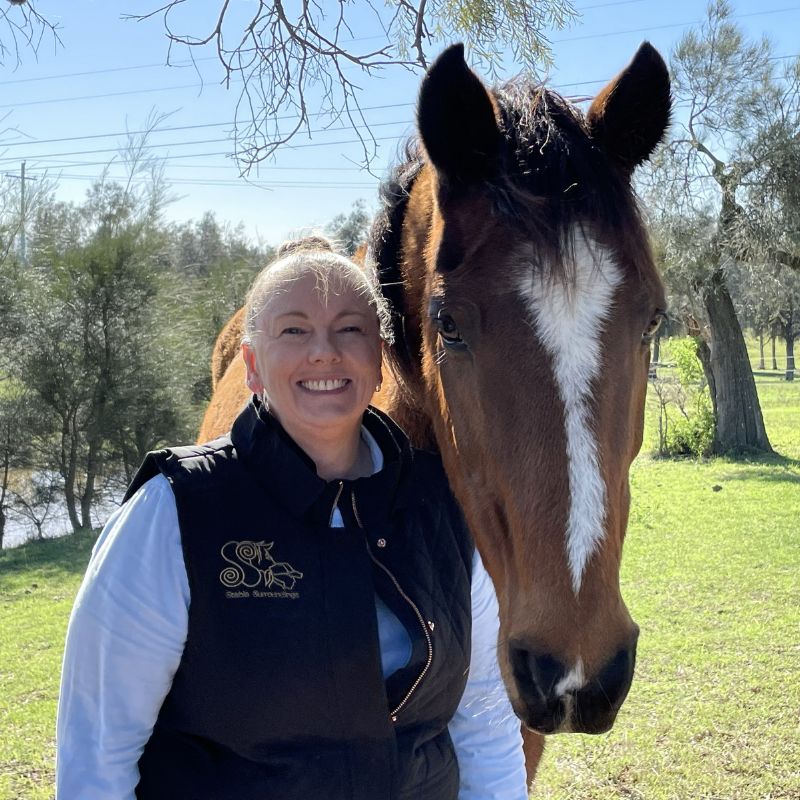
She went on to establish Stable Surroundings, providing Equine Assisted Services from her private practice in Singleton, NSW.

She now helps other veterans, offers meaningful engagement opportunities to trainee soldiers and works with a few NDIS clients.

Presentation:
Boots, Bridles and Beyond: A Female Soldiers Journey to Finding Purpose and Identity after the Army

Jodie’s presentation share’s insight into how she became the independent, resilient person she is today with the ability to cope with Army life, as a single female moving from state to state every few years.

It also highlights how horses have played a major part in connecting her with her community in new places.

Jodie will also share insight into her experience beyond the Army, information for what works for sessions with veterans and how veterans can access funding to access Equine Assisted Therapy.

Natasha Whitwell

Bio:

Natasha Whitfield is the Director of Seen and Herd Equine Assisted Therapy and an Equine Assisted Mental Health Practitioner with a strong focus on trauma-informed practice.

Over the past few years, she has developed and delivered equine-assisted therapy programs for a diverse range of client groups, including neurodivergent individuals, victim-survivors of Domestic Family and Sexual Violence (DFSV), veterans and individuals recovering from suicide attempts.

Natasha has successfully secured and delivered a number of funded equine-assisted mental health programs in partnership with organisations including the Hunter New England and Central Coast Primary Health Network (PHN), Care Connect NSW, Soldier On Australia and The Department of Veterans’ Affairs. Her work is recognised for combining experiential learning, psychoeducation and trauma-informed approaches to support emotional regulation, resilience and recovery.

Natasha holds a Diploma of Counselling, is a Level 2 ACA Counsellor and an Equine Assisted Mental Health Practitioner trained through Equine Assisted Therapy Australia. She has undertaken further training and CPD in Internal Family Systems (IFS) Autism Spectrum Disorder Clinical Specialist (ASDCS) Certification and domestic violence training. She is currently completing certification training in Somatic Therapy for Complex Trauma.

Presentation:
The Efficacy of Equine Assisted Therapy in Supporting Victim-Survivors of Domestic Family and Sexual Violence (DFSV)

Victim-Survivors of Domestic Family and Sexual Violence are often trapped in survival mode. For some, talk therapy can be re-traumatising, having told their story many times before.

Natasha developed a six-week experiential program of equine assisted therapy and psychoeducation to enable participants to understand their trauma responses and support their autonomic nervous system accordingly.

Further, the participants developed a felt sense of safety in relationship with horses.

Learning Outcomes:

Natasha’s presentation will provide insight into:

Attendees can expect practical ideas and reflections that can be integrated into their own work and practice settings, along with the opportunity to ask questions following the presentation.

Nadine Delaney

Bio:

Nadine Delaney (she/her) is an Accredited Mental Health Social Worker and founder of Hunter Valley Children’s Therapies, a private practice in the Hunter Valley, NSW, specialising in trauma-informed, neuroaffirming therapy for children, adolescents and families.

She is also the Co-Founder of Nature Based Therapies Australia, where she provides professional training, clinical supervision and consultation to practitioners integrating nature based and animal / equine assisted approaches into their practice.

Nadine is certified in Equine Assisted Psychotherapy and is an EMDRAA Accredited EMDR Practitioner. Her clinical work integrates EMDR, nature based therapy and equine assisted psychotherapy. She has a particular passion for working with neurodivergent children and adolescents, using experiential, relationship based approaches that harness the therapeutic potential of nature, movement and human animal connection.

Presentation:
Tapping Into Nature: Experiential Bilateral Stimulation in Nature-Based and Equine-Assisted Practice

Nature-based and equine-assisted practitioners regularly work with movement, rhythm, sensory engagement, relationship and embodied experience. These elements provide rich opportunities to support regulation, resourcing and integration within trauma-informed therapy. This workshop will introduce participants to simple, accessible ways of using bilateral stimulation (BLS) within nature-based and relational practice contexts. When paired with positive experiences, bilateral stimulation may strengthen neural networks associated with safety, calm and connection, helping clients move beyond simply thinking they are safe to actually feeling safe within their bodies (Shapiro, 2018; Leeds, 2016).

Through a 20- minute experiential activity, participants will be invited to connect with a positive resource, either from memory or from the natural environment, and explore how rhythmic bilateral stimulation can strengthen felt experiences of calm, connection, confidence and safety. The activity will demonstrate how nature itself can become a resource, particularly for clients who may find visualisation, cognitive reflection or direct verbal processing difficult.

The workshop will also consider how BLS can be integrated into outdoor, equine-assisted and experiential therapy settings in developmentally appropriate and neurodiversity-affirming ways. Participants will be encouraged to reflect on how moments of joy, mastery, connection or calm can be noticed, strengthened and carried forward within therapeutic work.

This session is designed to be practical, playful and embodied, offering participants a felt experience of the concepts being discussed. Rather than simply learning about resourcing, participants will have the opportunity to experience it directly.

Learning Outcomes:

By the end of this session, participants will be able to:

Rachel Farr

Bio:

Rachel Farr is the Director and Lead Practitioner at Equine Assisted Psychotherapy QLD (EAPQ), a registered NDIS provider where she has led private practice for over six years.

Her work is informed by both extensive professional experience and personal insight into the lived realities of complex trauma, shaping her commitment to supporting individuals with long-term mental health needs.

Rachel holds a Postgraduate Certificate in Community and Youth Work from Griffith University and completed Mental Health Practitioner training with Equine Assisted Therapies Australia in 2018.

She is currently finalising her Master of Counselling (Person-Centred Practice) with the University of Canberra (2026).

With over 20 years’ experience across the NDIS disability sector, youth, community and mental health, Rachel specialises in working with complex trauma, supporting NDIS participants, young people, those in care and individuals experiencing AOD challenges.

She achieves this through grounded, relational and attuned practice alongside equine and animal partners.

Presentation:
The space they hold: Equine Attunement and Relational Practice in Complex Trauma

Recognise how equine attunement supports safety, regulation and relational trust in clients with complex trauma.

Learning Outcomes:

Bluey Gilkes

Bio:

With a diverse background spanning counselling, education, disability support and equine-assisted practice, Bluey brings a wealth of experience supporting children, adolescents and adults to thrive.

Her career has included roles as a Behaviour and Wellbeing Facilitator in a primary school, Senior Behaviour Therapist working with children and adolescents with Autism and ADHD and a Teacher Aide supporting students with disabilities.

Now working as an Equine-Assisted Counsellor, Bluey combines her professional expertise with a lifelong passion for animals, nature and human connection.

A dedicated advocate for both people and animals, Bluey has long recognised the unique ability of nature and animal-assisted approaches to promote healing and resilience.

She has created a safe, welcoming and trauma-informed space where clients can explore their experiences, build self-awareness, and foster personal growth alongside her herd of horses.

Through a person-centred approach, she supports individuals to strengthen emotional wellbeing, develop meaningful relationships and discover their own capacity for growth and change.

Her work is grounded in the belief that connection – to self, others, community, nature, and animals – can be a powerful catalyst for transformation.

Presentation:
The use of evidence-based rhythm and drumming approaches to foster connection and belonging.

Sabrina Stephens

Bio:

Sabrina moved to Australia from Germany in 2004.

Her love of horses landed her a WOOFING (Willing Workers on Organic Farms) job on a Cattle property that also bred Arabians horses, South of Brisbane QLD.

Sabrina started her own business as an Equine Bodyworker in 2011, and after years of working on the horses, Sabrina felt that she could support the horses better, by helping their owners, with issues they were going through.

Sabrina attained her Neuro Linguistic Kinesiology qualification in 2020, and while she enjoyed offering Horse and Rider sessions, she wanted to go deeper into the world of healing through the lense of Equine Assisted Therapy.

Sabrina finished her Diploma of Counselling through Equine Assisted Therapy Australia in 2022.

Since then, Sabrina has started her own Private Practice where she offers Equine Assisted Therapy, Somatic Experiencing (SE) and Sensorimotor Art Therapy.

Sabrina is currently studying a Bachelor of Counselling.

Presentation:
Guided Art Therapy Meditation

Interested conference attendees are invited to participate in Sabrina’s Guided Art Therapy Meditation, which will be held from 11.30am – 1.30pm on both Tuesday and Wednesday during the conference.

Over this two-hour experiential session, participants will be gently guided through an exploration of self, regulation and trust.

Supported by music, mindfulness and creative expression, attendees will be invited to reflect on their personal journey and express their experiences through art in a safe and supportive environment.

This reflective process offers an opportunity to explore questions such as: Where are my roots? What gives me a sense of belonging? What is my purpose?

No artistic experience is required – only a willingness to engage with the creative process and explore personal insights through art, music and reflection.

Donna Rose

Bio:

Donna is a dedicated practitioner who combines Somatic Experiencing with Family Constellations to support individuals on their healing journeys.

She currently runs a private practise as a Touch Practitioner and facilitates Family Constellation groups.

Since completing her training as a Family Constellations Facilitator in 2018 with Margarete Koenning, Donna has remained actively engaged with the Systemic Constellations Academy.

Donna helps people dissolve dysfunctional patterns and intergenerational trauma.

She supports individuals in reconnecting with their inner wisdom and ancestral lineage by combining a solid theoretical framework with embodied, experiential learning.

Donna’s 1:1 and group facilitation is enhanced by her training in Equine Assisted Therapy and Craniosacral Therapy

Presentation:
Belonging in Community: A Family Constellations Experience

Conference participants are invited to take part in experiential Family Constellations sessions on Tuesday and Wednesday from 2pm – 4pm.

Participants will explore the meaning of belonging within family, relationships and community systems.

Family Constellations draws on broader fields of systemic approaches to relational healing, and in particular on aspects of Gestalt therapy: experiential, present-moment awareness, embodied process, group process work, and the phenomenological approach.

Learning Outcomes:

Georgia Rose

Bio:

Georgia Rose is an equine bodyworker and educator supporting south east Queensland.

A path of formal study has led her to attain qualifications of a Bachelor of Equine Science and multiple certifications in Groundwork Coaching and Equine Bodywork.

She is proud to be a Masterson Method Certified Practitioner and loves sharing this beautiful modality with her clients.

In 2022 she attended a Freedom Based Training clinic with Elsa Sinclair.

Over the past several years Georgia has practised and integrated concepts of Freedom Based Training into everything she does with horses.

She is eager to share this approach of connecting with horses through developing their sensory system.

Presentation One:
Masterson Method Interactive Demonstration

Conference attendees are invited to participate in an interactive demonstration of the Masterson Method®, a unique approach to equine bodywork that focuses on recognising and responding to subtle signs of tension within the horse.

During this hands-on session, participants will be introduced to the Bladder Meridian Technique and other foundational Masterson Method approaches.

Through live demonstrations and guided practice, attendees will learn how to observe the horse’s responses to touch and work with the horse in a way that encourages relaxation, trust and connection.

Learning Outcomes:

This experiential workshop offers a valuable opportunity to deepen understanding of equine wellbeing while exploring the importance of listening and partnership in human-horse interactions.

Eight participants will have the opportunity to work directly with the horses, while observers are welcome to attend and learn from the experience.

Presentation Two:
Concepts of Freedom-Based Training Workshop

Join us for an introduction to Freedom-Based Training (FBT), an innovative approach developed by Elsa Sinclair that centres on choice, consent and relationship in horse-human interactions.

This experiential workshop will explore the foundational principles of Freedom-Based Training, including how trust, communication and connection can be developed without the use of traditional training tools or pressure-based methods.

The session will include a discussion of the theory behind the approach, live demonstrations with horses and opportunities for participants to experience the concepts in practice.

Working alongside horses who are free to choose their level of engagement, attendees will gain insight into the power of autonomy, curiosity and genuine partnership.

Learning Outcomes:

Whether you work with horses professionally or simply wish to deepen your understanding of horse-human relationships, this workshop offers a thought-provoking and practical exploration of a rapidly growing approach.

Participant numbers for the hands-on component will be limited to eight, with observers welcome to attend.

Lalania Tusa

Bio:

Lalania is a proud Kuku Yalanji woman who was born and raised on her traditional lands of Mossman, Far North Queensland.

She is a highly respected Indigenous artist and cultural facilitator, who has been widely recognised for her work in connecting people with First Nations culture.

Many of Lalania’s artworks are direct translations of dreamtime stories passed down through the long line of generations, who have received special tools and training from their ties to land and Country.

Lalania’s intention is to immerse herself and others in the sensitive space of cultural knowledge, appreciation and connection to land and sea in order to create a better understanding of First Nations cultural practices.

In recent years, Lalania has received awards for her innovation and creativity in helping to support indigenous children in care to connect and take pride in their First Nations culture.

Presentation:

Lalania will host a day for art and jewellery making on Wednesday, September 23, and will also be a member of our Working with Diverse Communities panel.

The workshop will include art and storytelling, seeded jewellery making and the art of holistic healing through weaving practices and therapies.

Learning Outcomes:

Participants will leave with a greater understanding of First Nations cultural and spiritual practices.